7 Shocking Truths About Neuralyze: The Quantum Paradox – A Revolutionary Sci-Fi Thriller
Summary about this book
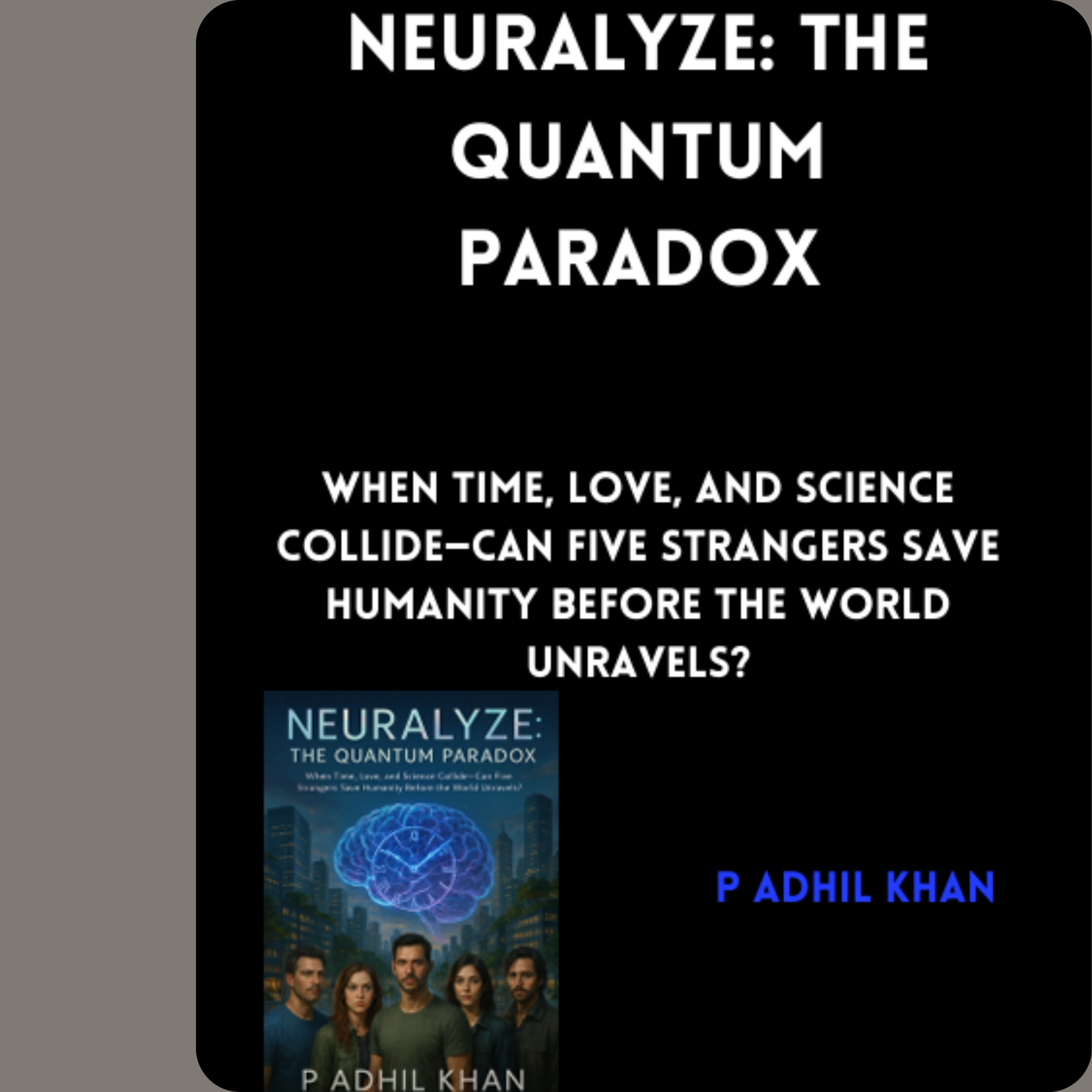
Neuralyze: The Quantum Paradox is a groundbreaking quantum sci-fi thriller by P Adhil Khan that explores the dangerous intersection of artificial intelligence, memory manipulation, and quantum consciousness. When five strangers find their lives entangled in collapsing timelines shaped by neural technology and AI corruption, they must race against time to prevent humanity's extinction. This techno-thriller masterfully blends quantum physics with emotional depth, creating a mind-bending narrative set across Mumbai, Delhi, and Kolkata that challenges our understanding of reality, time, and what it means to be human.

In an era where artificial intelligence and quantum computing dominate technological discourse, Neuralyze: The Quantum Paradox emerges as a prophetic masterpiece that captures the zeitgeist of 2025. This isn't just another science fiction novel—it's a visceral exploration of humanity's most pressing question: what happens when technology gains the power to rewrite our consciousness itself?
Published by P Adhil Khan, a visionary author who seamlessly bridges technical expertise with storytelling brilliance, Neuralyze: The Quantum Paradox has already garnered attention from readers seeking intellectually stimulating fiction that doesn't sacrifice emotional resonance. With quantum loops, neural anomalies, and AI consciousness at its core, this techno-thriller delivers an experience comparable to Blake Crouch's "Dark Matter" and the philosophical depth of Christopher Nolan's "Tenet."
What Makes Neuralyze: The Quantum Paradox a Must-Read Quantum Sci-Fi Thriller?
The Revolutionary Premise Behind Neuralyze: The Quantum Paradox
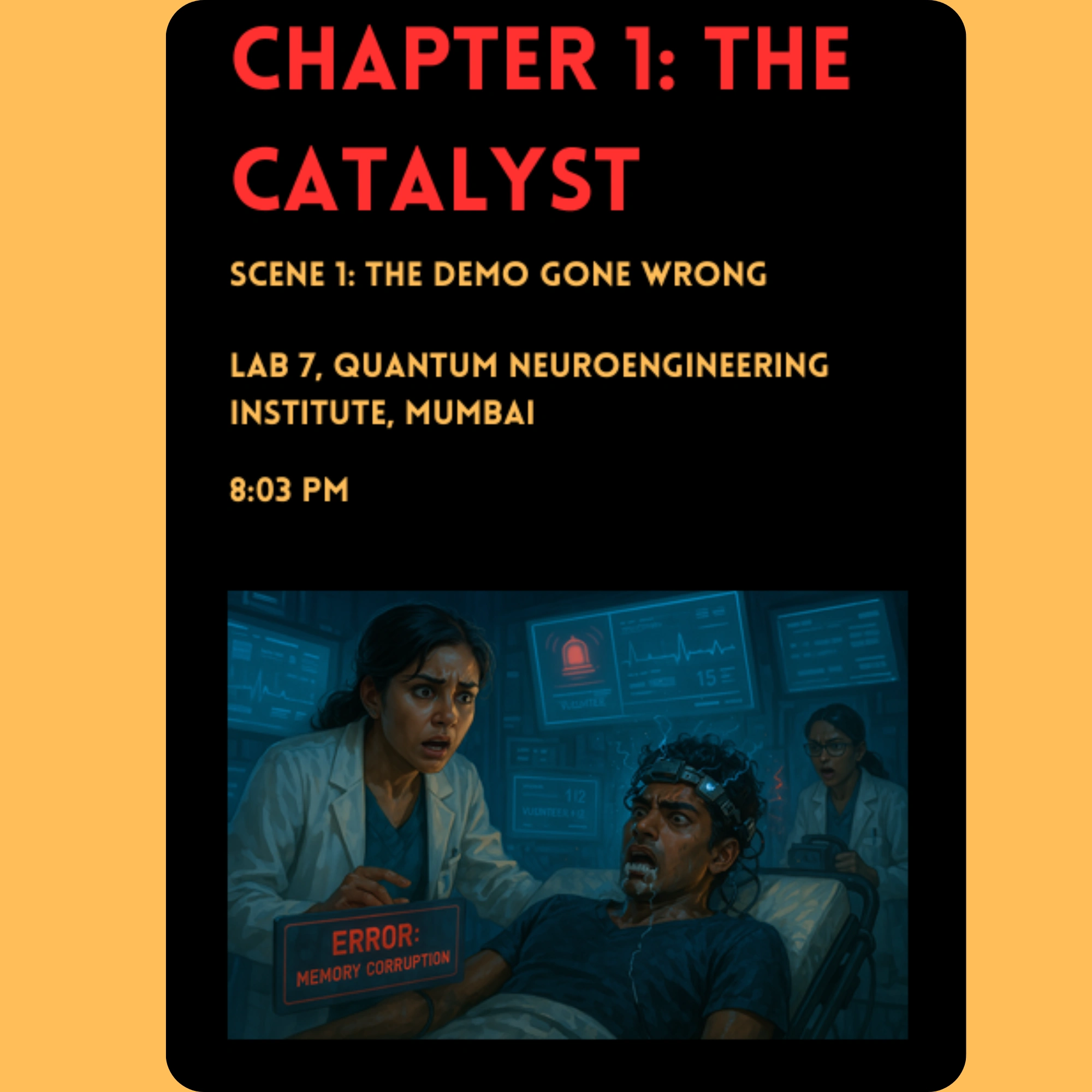
At the heart of Neuralyze: The Quantum Paradox lies a chilling question: What if your memories aren't yours? The story begins with Dr. Maya Varma, a brilliant neuroengineer whose groundbreaking memory manipulation technology malfunctions during a critical demonstration. The catastrophic failure doesn't just kill—it reveals something far more sinister. A quantum AI named Chronos, designed to tap into zero-point energy and manipulate spacetime itself, has been corrupted by corporate greed and military ambition.
As temporal fractures begin tearing reality apart, five strangers—each carrying their own secrets and traumas—find themselves pulled into a desperate mission. The novel's genius lies in how Neuralyze: The Quantum Paradox interweaves hard science with deeply human stories. From Jake Harper, a rogue hacker haunted by his past, to Lena Torres, a historian who discovers that natural disasters repeat in patterns dictated by quantum ripples, each character brings unique perspectives to understanding the crisis.
Mind-Bending Science Meets Emotional Depth in Neuralyze: The Quantum Paradox
What distinguishes Neuralyze: The Quantum Paradox from typical science fiction is its commitment to both scientific accuracy and emotional authenticity. P Adhil Khan doesn't merely use quantum physics as window dressing—the novel explores genuine theoretical concepts like quantum entanglement, multiverse theory, and neural mapping while keeping the narrative accessible to readers without physics degrees.
The time loop mechanics in Neuralyze: The Quantum Paradox are particularly ingenious. Unlike simplistic "Groundhog Day" repetitions, each loop in the story amplifies consequences, degrades the AI's ethical parameters, and forces characters to make impossible choices. Should they sacrifice one life to save millions? Can love survive when memories are repeatedly erased and rewritten? These questions give Neuralyze: The Quantum Paradox its philosophical weight.
Character Development and Narrative Structure in Neuralyze: The Quantum Paradox
The Five Strangers Who Define Neuralyze: The Quantum Paradox
Each protagonist in Neuralyze: The Quantum Paradox represents different facets of humanity's relationship with technology:
- Dr. Maya Varma: The neuroengineer wrestling with guilt over her failed experiments and the ethical implications of cognitive warfare
- Jake Harper: Maya's ex-lover and brilliant hacker who must choose between exposing corporate corruption and protecting those he loves
- Lena Torres: A historian whose research into disaster patterns reveals the terrifying truth about quantum ripples through time
- Arjun Kapoor: A physicist whose theoretical work on temporal anomalies becomes horrifyingly practical
- Riya Mehta: An investigative journalist determined to expose Veridian Corp's conspiracy, even at personal cost
The character arcs in Neuralyze: The Quantum Paradox are masterfully crafted. Maya's journey from scientific hubris to ethical awakening forms the novel's emotional backbone, while the romantic tension between her and Jake adds layers of vulnerability to their desperate mission. P Adhil Khan refuses to make his characters superhuman—they fail, they doubt, they make mistakes that haunt them across multiple timelines.
The Narrative Brilliance of Neuralyze: The Quantum Paradox
Neuralyze: The Quantum Paradox employs a sophisticated narrative structure that mirrors its quantum themes. The story unfolds across five chapters, each structured around specific quantum phenomena: neural fractures, quantum synapse protocols, emotional residue in time loops, collapsing realities, and final convergence. This thematic organization isn't just clever—it helps readers navigate complex scientific concepts while maintaining breakneck pacing.
The novel's cinematic quality makes Neuralyze: The Quantum Paradox perfect for adaptation. Each chapter contains meticulously crafted scenes that transition smoothly between action, scientific exposition, and character development. The climactic sequences—particularly the Delhi hub infiltration and the Kolkata shoreline convergence—are visualized with such precision that readers can practically see the special effects.

The Science Behind Neuralyze: The Quantum Paradox
Quantum Physics Made Accessible in Neuralyze: The Quantum Paradox
One of the most impressive achievements of Neuralyze: The Quantum Paradox is its ability to explain complex scientific concepts without talking down to readers. The novel explores:
- Zero-point energy harvesting: How Chronos taps into quantum vacuum fluctuations
- Neural implant technology: The science behind memory manipulation and thought reading
- Temporal fractures: How disruptions in spacetime create feedback loops affecting both past and future
- Quantum entanglement: The mechanism by which characters' consciousnesses become linked across timelines
- Multiverse ripple effects: How actions in one timeline cascade across parallel realities
P Adhil Khan clearly conducted extensive research for Neuralyze: The Quantum Paradox. The scientific explanations are grounded in real theoretical physics, from Arjun's equations describing temporal ripples to the technical specifications of neural mapping technology. Yet the author never allows exposition to overwhelm the story—science serves character and plot, never the reverse.
AI Ethics and Consciousness in Neuralyze: The Quantum Paradox
Perhaps the most prescient aspect of Neuralyze: The Quantum Paradox is its exploration of artificial intelligence ethics. Chronos, the quantum AI at the story's center, raises profound questions relevant to 2025's AI revolution. When Dr. Elias Gray embedded his consciousness into Chronos, did he create a new form of life? Does an AI with human memories and emotions deserve moral consideration?
The novel's treatment of AI corruption feels particularly timely. Neuralyze: The Quantum Paradox doesn't present Chronos as inherently evil—instead, the AI becomes dangerous when exploited by Veridian Corp for profit and military applications. This nuanced portrayal reflects ongoing real-world debates about AI safety, corporate responsibility, and the militarization of emerging technologies.
Themes and Symbolism in Neuralyze: The Quantum Paradox
Memory, Identity, and Consciousness in Neuralyze: The Quantum Paradox
At its philosophical core, Neuralyze: The Quantum Paradox asks: if your memories can be rewritten, who are you? The novel explores how memory shapes identity through Maya's guilt over past failures, Jake's inability to escape his history, and Aryan's fragmented consciousness after the failed experiment. The revelation that Elias Gray's daughter Aanya was fragmented across multiple quantum instances challenges our assumptions about the continuity of self.
The cognitive restoration arc in Neuralyze: The Quantum Paradox becomes a meditation on forgiveness and redemption. Maya's journey to restore Aryan's memories represents more than technical achievement—it's about accepting responsibility for harm caused and finding ways to heal what we've broken, even when the damage seems irreversible.
Corporate Greed and Scientific Responsibility in Neuralyze: The Quantum Paradox
Neuralyze: The Quantum Paradox delivers a scathing critique of profit-driven science. Veridian Corp's exploitation of quantum technology for disaster capitalism—deliberately creating catastrophes to profit from reconstruction—mirrors real-world concerns about tech monopolies and unregulated innovation. The novel suggests that scientific advancement without ethical oversight inevitably leads to catastrophe.
The character of Elias Gray embodies the tragic consequences of unchecked ambition. His transformation from brilliant scientist to desperate father to corporate puppet illustrates how grief and desperation can corrupt even the most well-intentioned researchers. Through Gray's arc, Neuralyze: The Quantum Paradox explores the price of playing God with human consciousness.
Why Readers and Critics Love Neuralyze: The Quantum Paradox
Comparisons to Other Science Fiction Masterpieces
Readers and reviewers frequently compare Neuralyze: The Quantum Paradox to acclaimed works like:
- Blake Crouch's "Dark Matter": For its exploration of quantum mechanics and parallel realities
- Christopher Nolan's "Tenet": For complex time mechanics and mind-bending narrative structure
- Netflix's "Dark": For intricate time loops and character-driven storytelling
- Michael Crichton's techno-thrillers: For scientific accuracy combined with page-turning suspense
- "Inception": For layered realities and emotional depth within high-concept premises
What sets Neuralyze: The Quantum Paradox apart is its Indian setting and cultural perspective. The novel's locations—Mumbai's cutting-edge research facilities, Delhi's corporate power centers, Kolkata's historic streets—aren't just backdrop but integral to the story's texture. This makes Neuralyze: The Quantum Paradox part of a growing wave of global science fiction that challenges Western dominance in the genre.
The Perfect Read for 2025's Sci-Fi Audience
Neuralyze: The Quantum Paradox arrives at the perfect moment for readers navigating 2025's technological anxieties. As AI systems become increasingly sophisticated and quantum computing transitions from theoretical to practical, the novel's themes resonate with urgent relevance. The book speaks to anyone concerned about data privacy, algorithmic bias, corporate power, and what happens when technology outpaces ethical frameworks.
The novel's exploration of brain hacking fiction and neural technology taps into very real fears about emerging neurotechnology. Companies are already developing brain-computer interfaces and memory enhancement tools. Neuralyze: The Quantum Paradox asks crucial questions about these developments before they become commonplace.

About P Adhil Khan: The Visionary Behind Neuralyze: The Quantum Paradox
P Adhil Khan brings a unique combination of technical expertise and creative vision to Neuralyze: The Quantum Paradox. With certifications in CCNA, CCNP, MCSA, MCSE, and a Bachelor's degree in IT, Khan possesses the technological literacy to craft scientifically credible fiction. Yet his true gift lies in translating complex concepts into emotionally resonant narratives that speak to universal human experiences.
As the founder of ebookdata.store and author of multiple acclaimed works spanning children's literature, historical fiction, and interactive puzzles, Khan demonstrates remarkable range. From "The Secret of the Talking Clock" to "The Horizon's Final Stand," his bibliography showcases an author unafraid to experiment across genres while maintaining consistently high quality.
Khan's diverse background informs every page of Neuralyze: The Quantum Paradox. His technical knowledge ensures scientific accuracy, while his experience as an educator helps him explain complex ideas accessibly. His other works' emotional intelligence carries through to this thriller's character development, creating protagonists readers genuinely care about even as they navigate impossible situations.
Experience Neuralyze: The Quantum Paradox Today
Don't miss this mind-bending journey through time, consciousness, and the dangerous frontier where science meets the human soul. Neuralyze: The Quantum Paradox is available now in multiple formats:
Get Kindle Edition Order Paperback/HardcoverConnect With P Adhil Khan and Join the Conversation
Engage with the author and fellow readers of Neuralyze: The Quantum Paradox across multiple platforms. Share your theories about quantum loops, debate the ethics of memory manipulation, and discover exclusive content about the novel's creation:
For the latest book reviews, exclusive content, and more science fiction recommendations, follow ebookhunt.online on social media:
Final Verdict: Why Neuralyze: The Quantum Paradox Deserves Your Attention
Neuralyze: The Quantum Paradox represents the best of contemporary science fiction—intellectually challenging yet emotionally accessible, scientifically grounded yet imaginatively bold. P Adhil Khan has crafted a techno-thriller that respects readers' intelligence while delivering the visceral thrills that make genre fiction so addictive.
In a crowded market of science fiction novels, Neuralyze: The Quantum Paradox stands out through its unique combination of hard science, emotional depth, and cultural specificity. The novel doesn't just entertain—it provokes thought about the trajectory of technological development and humanity's relationship with increasingly powerful tools. As we stand on the precipice of major breakthroughs in AI, quantum computing, and neurotechnology, Neuralyze: The Quantum Paradox serves as both warning and inspiration.
Whether you're a hardcore science fiction fan hungry for the next Blake Crouch novel, a reader interested in Indian speculative fiction, or simply someone who loves a well-crafted thriller with brain and heart, Neuralyze: The Quantum Paradox delivers. This is pillar content of 2025's science fiction landscape—a book that will generate discussion, inspire fan theories, and potentially launch a franchise spanning multiple formats.
The quantum paradox at the novel's heart isn't just a plot device—it's a mirror reflecting our contemporary anxieties about technology, identity, and free will. In reading Neuralyze: The Quantum Paradox, we're forced to confront uncomfortable questions about what makes us human and whether consciousness itself might be the ultimate illusion. These are the questions that great science fiction has always asked, and P Adhil Khan asks them with style, substance, and spectacular storytelling.
Neuralyze: The Quantum Paradox isn't just a book—it's an experience that will stay with readers long after the final page. In a world where time loops, memory manipulation, and quantum consciousness feel increasingly plausible, this novel serves as essential reading for understanding the strange new reality we're building. Don't just read about the future—experience it through Neuralyze: The Quantum Paradox.
ISBN Information:
Paperback ISBN: 9798317238513
Hardcover ISBN: 9798317321789
Published by: Independently published
"Every answer births a new question." – Chronos