
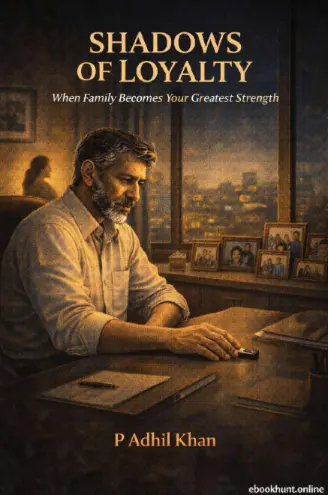
Shadows of Loyalty is a moral dilemma thriller that asks one uncomfortable question: what happens when a good man works inside a corrupt system? Written by P Adhil Khan, this novel follows Arjun Malik, a government intelligence officer who discovers 10,000 missing children hidden in a remote mountain compound. The man holding them is not a typical villain. He is a former intelligence officer who genuinely believes he saved those children from a system that threw them away.
If you want a thriller that does not hand you easy answers, Shadows of Loyalty delivers exactly that. It forces you to sit with impossible questions about family, loyalty, and the price of staying human inside a system that demands your moral compromise.
What Is Shadows of Loyalty About
Arjun Malik is a 55-year-old intelligence officer who has served the Indian government for 28 years. He wakes at 5:47 AM every morning out of pure discipline. He is a good husband, a decent father, and an excellent officer. He has prevented terror attacks and saved lives working in shadows so deep that even his own family does not fully understand what he protects them from.
Then his phone buzzes with a message that changes everything.
A former intelligence officer named Vikram Choudhury has built a compound in the Aravalli Hills. Inside it are 10,000 children who were reported missing over the past eight years. Vikram has rigged the compound with explosives. He has given the government 72 hours to meet his demands. If they refuse, all ten thousand children die.
Vikram was once the best operative in the same division Arjun works for. He was decorated, promoted, and celebrated. Then he discovered corruption inside the system. When he tried to expose it, the system discharged him and tried to eliminate him. He spent the next fifteen years building something he believes is better. He rescued children the government forgot. He educated them, fed them, and gave them structure.
Vikram is a kidnapper. He is also a savior. He is the villain of the story, except he might be right. That contradiction is the engine that drives the entire novel. Shadows of Loyalty does not let you pick a side and stay there. It keeps shifting the ground under your feet.
What Makes This Thriller Different
Most thrillers give you a clear hero and a clear villain. Shadows of Loyalty refuses to do that. By the third page, you will start to wonder if Vikram is actually making sense. By the tenth page, you will question whether Arjun is on the right side. By the end, you will not be sure if anyone in the story made a good choice.
more free book reviews and thrillers on ebookhunt.online
The book builds itself around three questions that stay with you long after you finish. If someone rescues 10,000 children from a government that abandoned them but imprisons those children in the process, are they a hero or a villain? If you could expose corruption but doing so would put your family in danger, would you do it? If staying inside a broken system lets you prevent worse harm, does that make your silence acceptable?
These questions do not have clean answers. Shadows of Loyalty does not pretend they do.
Shadows of Loyalty explores compersion (the feeling of being complicit in something you know is wrong) better than any political thriller I have read in recent years. It does not comfort you. It makes you think about your own compromises, the things you stay silent about, the systems you participate in even though you know they are broken.
The Characters That Drive Shadows of Loyalty
Arjun Malik is not your typical thriller protagonist. He is 55 years old, married for 23 years to Priya, father of two adult children. He lives in a modest Delhi apartment. He is not an action hero. He is a bureaucrat who has spent his life inside the machinery of government security. That is what makes him interesting. He is a morally serious person who learns that being good inside a corrupt system means accepting your own complicity in things you hate.
The character Vikram Choudhury is the real achievement of this book. He is brilliant and strategic. He genuinely believes he is the hero. He loves the children he has taken. He educates them in mathematics, science, languages, and philosophy. He saved them from trafficking and starvation. But he also controls them completely. He gives them no freedom. He has built his own version of the system he hates, and like every system, it demands absolute obedience.
Vikram is not insane. That is what makes him frightening in Shadows of Loyalty. He is a man who saw the truth about his government and got broken by it. He is not evil. He is someone who decided that the only way to fight corruption was to create a mirror version of it with himself in charge.
Priya, Arjun’s wife, deserves special mention. She works in intelligence herself. She is sharp, capable, and sees through every lie Arjun tries to tell. She does not just support him from the side. She thinks three moves ahead and challenges him when he needs challenging. She is the moral anchor of the story without being preachy about it.
P Adhil Khan author page on Goodreads
My Experience Reading Shadows of Loyalty
I went into this book expecting a standard political thriller with clear sides and a predictable ending. What I found was much more uncomfortable. The story does not let you settle into any comfortable position. Just when you start rooting for Arjun, you realize he is making the same compromises he claims to resist. Just when you start hating Vikram, you remember he saved 10,000 children that everyone else forgot.
I read it in one sitting. That rarely happens with short novels because I tend to spread them out. But Shadows of Loyalty pulls you in and keeps you turning pages. The prose is tight. There is no padding. Every scene moves the moral argument forward without telling you what to think.

I read it on ebookhunt.online, which made the experience better. The platform has a 3D page-flip effect that makes reading feel like holding a real book. I turned on the rain ambiance while reading the compound scenes, and it added a layer of atmosphere I did not expect. You can also switch to dark mode, adjust text size, and use a magnifier for line-by-line reading. The reading time tracker helped me stay aware of how absorbed I was getting.
Who Should Read This Book
If you work inside a system you do not fully believe in, Shadows of Loyalty will speak to you. If you have ever made a compromise you regretted, or stayed silent when you should have spoken, or wondered whether you are a good person or just someone good at making excuses, read this book.
Shadows of Loyalty is for people who understand that the world is more complicated than good versus evil. It is for readers who do not want easy answers because they know easy answers are usually the first compromise of integrity. It is for anyone who has ever asked themselves what it actually costs to survive inside a system built on power and secrecy.
The book is also surprisingly accessible. You do not need to know anything about Indian intelligence or government operations to follow the story. The moral questions are universal. Anyone who has ever worked a job, raised a family, or tried to do the right thing in a difficult situation will recognize themselves in these pages.
Shadows of Loyalty also introduces a young character named Aarav, a thirteen-year-old boy inside Vikram’s compound who is learning to think for himself. His arc is one of the most affecting parts of the story. He represents the real cost of systems that decide for children what is best for them.
Final Verdict
Shadows of Loyalty is a rare kind of thriller. It does not care about making you feel good. It cares about making you think. It asks you to sit with discomfort and not look away. The story ends not with triumph but with quiet resignation. The system continues. The compromises continue. The small acts of resistance from inside the machine continue, barely enough but still worth doing.
The book is 124 pages of original narrative that will stay with you longer than most 400-page novels you have read this year. If you are tired of thrillers that wrap everything up in a clean bow, pick up this book.
You can read Shadows of Loyalty for free on ebookhunt.online with the full 3D reading experience, including page-flip animation, ambient background sounds, dark mode, adjustable text zoom, and bookmarking. It is the kind of story that does not leave you. It forces you to answer its questions about yourself.
Frequently Asked Questions
Is Shadows of Loyalty based on a true story?
No, Shadows of Loyalty is a work of fiction. The characters, events, and settings are entirely imagined by author P Adhil Khan. However, the moral questions it raises about government corruption, institutional failure, and family loyalty are drawn from real-world dilemmas that many readers will recognize.
Who is the target audience for this book?

Anyone who enjoys political thrillers, moral dilemma fiction, and character-driven stories about family and compromise. The book works for readers who are tired of straightforward heroes and villains and want something that makes them think. It is suitable for adults and mature young adults who can handle morally complex themes.
How long is Shadows of Loyalty and how long does it take to read?

The book is 124 pages. Most readers finish it in one to two sittings, roughly two to three hours depending on reading speed. The tight narrative keeps you moving, so it feels shorter than the page count suggests.
Where can I read Shadows of Loyalty for free?
You can read it for free on ebookhunt.online. The platform offers a full 3D page-flip reading experience with ambient background sounds, dark mode, adjustable text zoom, a magnifier tool, reading time tracking, and bookmarking. It feels closer to reading a real physical book than a standard PDF.
What makes Shadows of Loyalty different from other political thrillers?
Most political thrillers give you a clear hero who defeats a clear villain. Shadows of Loyalty refuses that structure. It forces you to question which side is right and whether either side is actually good. The story does not end with justice served. It ends with the uncomfortable recognition that both sides made valid points and both sides compromised their principles.
Does the book have any content warnings?
Yes. The book contains mature themes including institutional corruption, moral ambiguity, psychological conflict, and discussion of human trafficking (not graphically depicted). Reader discretion is advised for younger or sensitive readers.
What other books has P Adhil Khan written?
P Adhil Khan writes across multiple genres including political thrillers (Bloodline Conspiracy, The Horizon’s Final Stand), science fiction (Neuralyze: The Quantum Paradox), fantasy (Eternal Bonds: Defenders of Elaria), children’s books (Math Mania Madness, Ramadan Wonderland), personal finance, and career development guides. You can find his full catalog on ebookhunt.online and major platforms like Amazon, Goodreads, and Waterstones.