
The Ultimate Islamic Historical Political Thriller: Why Every Reader Needs a Moral Leadership Novel in 2026
In the quiet corridors of power, where shadows stretch longer than the marble minarets they cling to, the true battle for a kingdom is never fought with steel. It is fought with whispers. This is the heart of an Islamic historical political thriller—a genre that doesn't just recount dates and battles, but explores the very soul of governance. If you are searching for a moral leadership novel that challenges your perception of right and wrong, you have arrived at the perfect destination.
A Journey Through Time: 1650-1750 Islamic Governance
The era between 1650 and 1750 was a pivotal moment in history. Great empires stood at the crossroads of tradition and progress. In this setting, political fiction about power and justice thrives. It was a time when a Sultan’s decision could build a university for the common man or spark a rebellion in the distant provinces. The complexity of Islamic Governance Fiction lies in its adherence to divine justice while navigating the messy, often brutal realities of human ambition.
In a world currently obsessed with rapid-fire news and surface-level politics, returning to a political thriller set in an Islamic empire provides a much-needed perspective. It allows us to see how succession politics and court intrigue and betrayal have always been the testing fires for true leaders. It’s not just about who sits on the throne; it’s about the burden that the throne places on the man.
Why Readers Crave Court Intrigue and Betrayal
What makes a novel about justice and betrayal so hard to put down? It is the power behind the throne. We are naturally drawn to the "Silent Serpents"—the trusted advisor betrayal that cuts deeper than any enemy's sword. When a minister spends thirty years appearing loyal while planting seeds of doubt, the psychological tension becomes unbearable for the reader.
This genre excels at showing political manipulation as a fine art. It’s about the justice versus power debate. Does a leader choose to be loved, or do they choose to be effective? Through the lens of an Islamic historical novel about politics, we see that the most dangerous villains are those who call their corruption "realism."

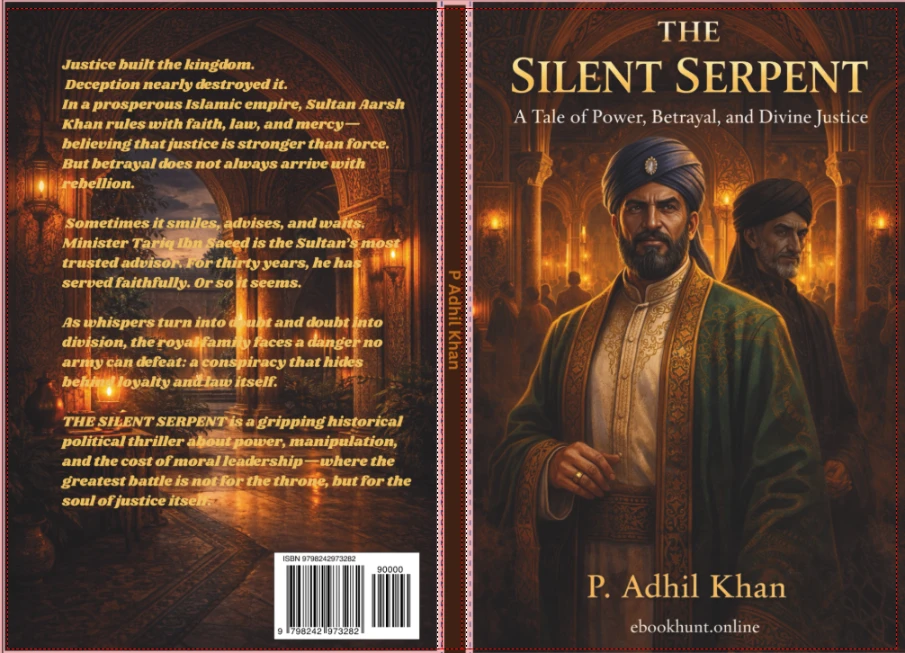
Spotlight: "The Silent Serpent" by P. Adhil Khan
If you are looking for the perfect example of this genre, The Silent Serpent is a masterclass in moral leadership novel writing. The story follows Sultan Aarsh Khan, a man who has spent forty years building a kingdom on the foundations of education and welfare. However, his greatest threat is not the Byzantium Empire at his borders, but his chief advisor, Minister Tariq.
Tariq is the ultimate personification of political manipulation. He doesn't want to kill the Sultan; he wants to make the kingdom ungovernable for the next generation. This Islamic historical political thriller takes us from the "Feast of Plenty" to the "Testing Fires" of the eastern provinces, where Prince Arman must learn that the perception of injustice is as dangerous as the act itself.
| Core Element | The Path of Justice (Sultan) | The Path of Power (Tariq) |
|---|---|---|
| Foundation | Education & Merit | Birth & Wealth |
| Method | Persuasion & Truth | Doubt & Whispers |
| Goal | A Strong Future | Personal Indispensability |

The Paradox of Justice: Acting Harshly to Remain Fair
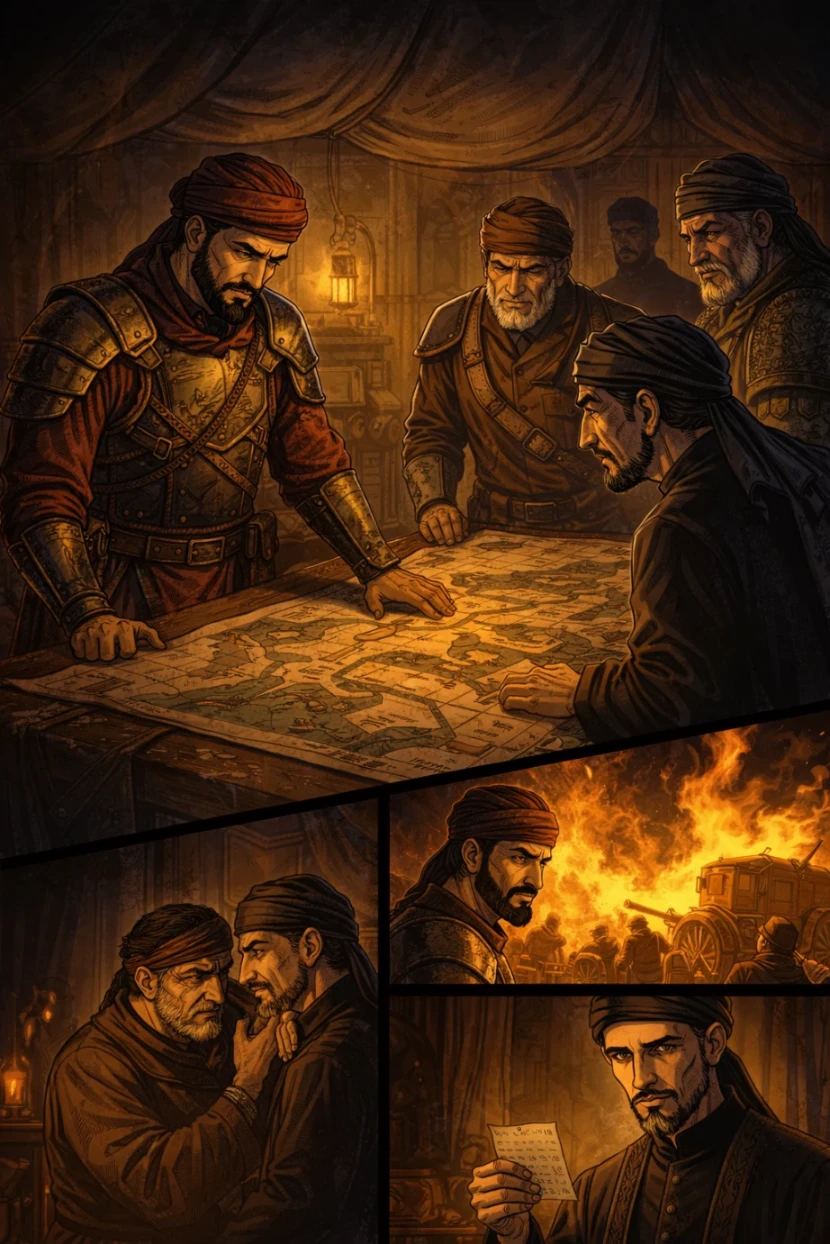
One of the most gripping aspects of political fiction about power and justice is the "Cruelest Trap." As the Sultan discovers in the story, sometimes a ruler must abandon the appearance of justice to protect the reality of it. When a minister is too clever to be caught by a court of law, the Sultan must make a choice that might make him look like a tyrant to the outside world.
This is where the moral leadership novel truly shines. It asks: Is it better to allow a kingdom to be poisoned from within, or to act decisively and risk your reputation? The Silent Serpent handles this with incredible nuance, showing how Princess Zahra and Prince Arman eventually evolve the kingdom's structure to ensure that corruption can no longer hide in plain sight.
Why This Genre Matters Today
While set centuries ago, the themes of Islamic historical political thriller novels are more relevant than ever. We live in an era of information warfare where "doubt is a garden that grows once the seeds are planted." By reading about Tariq’s "Minister’s Path," we learn to recognize political manipulation in our own lives and institutions.
A moral leadership novel teaches us that the foundation of a society matters more than its structure. If the foundation—the commitment to justice and care for the people—is strong, the surface cracks can be healed. It is a story of hope, showing that truth is the ultimate antidote to the serpent's poison.

Frequently Asked Questions
1. What defines an Islamic historical political thriller?
It is a sub-genre that blends historical settings of the Islamic world with complex plots involving governance, court intrigue, and the ethical dilemmas of leadership.
2. Who are the main characters in The Silent Serpent?
The story centers on Sultan Aarsh Khan (the wise ruler), Minister Tariq (the master manipulator), Prince Arman (the military successor), and Princess Zahra (the welfare-focused advisor).
3. Is this book available for free?
Yes! You can read the full journey of power and betrayal on EbookHunt.online without any paywalls.
Conclusion: The Triumph of Principle
An Islamic historical political thriller like The Silent Serpent is more than just entertainment; it is a study of the human condition. It demonstrates that true strength lies not in the ability to crush enemies, but in the ability to build values that outlast any single threat. As Sultan Arman learned, "The danger that nearly destroyed the kingdom became its greatest teacher."
Don't miss out on this gripping tale of court intrigue and betrayal. Explore the intersection of faith, imagination, and power today.

P. Adhil Khan is a multi-genre storyteller and technology expert dedicated to bridging faith and knowledge through engaging narratives.