

Free books for kids to read online are easy to find and hard to sort through, because most lists of them are just links with no explanation of what a child is actually getting. Some are scanned photocopies that only display as tiny, blurry images. Some are three-page previews that stop right before the story gets good.
A smaller number are real books, formatted for a screen, that a kid will actually finish. This piece skips the generic list and goes after the real question: which of these build an actual reading habit, and which just get closed after page one. Short answer: public domain classics from established libraries, a handful of dedicated children’s reading sites, and a screen that behaves more like a real book than a wall of text are the three pieces worth combining.
How do kids actually move from the alphabet to a full book?
Most kids start with letter sounds around age 3 to 4, move into short picture books by 5, and hit “leveled readers” (books graded by sentence length and vocabulary difficulty, not by age) somewhere between 5 and 7. By 8 or 9, a fluent reader is usually working through full chapter books without help. Somewhere in the young teen years, a lot of that reading shifts from a physical shelf to a phone or tablet, simply because that’s where the free supply is.
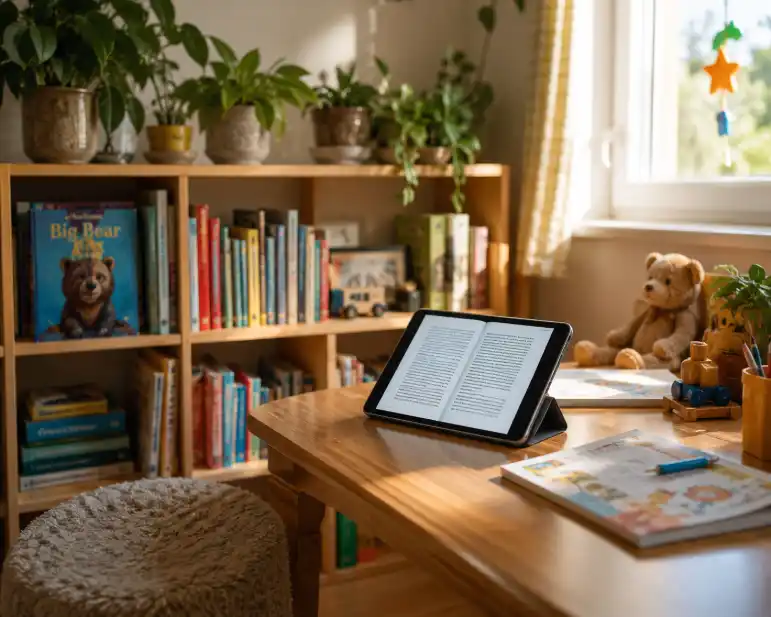
That shift isn’t a problem on its own. The problem shows up when the digital version of a book is worse than the paper one: no way to bookmark a page, tiny unreadable text, or a page that’s really just a photograph of a photocopy. A kid who’s still building reading stamina drops a book fast if the screen makes reading harder than it needs to be.
Reading researchers generally agree that the actual skill of reading, tracking words, decoding sounds, holding a sentence in memory long enough to get its meaning, is built through repeated exposure to real text, not through any single format.
A library shelf builds that skill. So does a well-built ebook. What doesn’t build it is a screen a kid can’t comfortably use for more than two minutes, which is exactly the problem with a lot of free kids’ book sites, and exactly why the search for free books for kids to read online needs to look past the first result.
Where can you actually find free books for kids to read online?
A few sources cover most of what’s genuinely useful and genuinely free, no card or account needed for the core collection:
- Project Gutenberg’s children’s shelf. Public domain (the copyright has expired, so anyone can use the work without permission or payment) classics like fairy tale collections, Alcott, and early Dr. Seuss-era contemporaries. Plain text and EPUB, no ads.
- Oxford Owl’s free ebook library. A UK-built collection organized by reading level, aimed squarely at early readers rather than adult fiction dressed up as a kids’ site. Oxford Owl free ebooks,
- Storyline Online. Actors reading picture books aloud on video, useful for kids who aren’t decoding text yet but are ready to follow a story.
- International and library-run digital collections, usually free through a local library card, covering newer titles a public domain shelf won’t have.
- A dedicated reading platform built for the format, where the point isn’t just hosting a file, it’s making the actual reading session comfortable. free books online,
The gap between these sources and a random download site claiming to offer free books for kids to read online is usually the reading experience itself, not the book list.
Which free books work best at each reading level?
Age and grade don’t map perfectly to reading ability, but they’re still the fastest way to narrow down free books for kids to read online without scrolling through a mismatched pile. A rough guide, based on what most leveled-reader systems actually use:
| Stage | Typical age | What to look for |
|---|---|---|
| Pre-K and kindergarten | 3 to 5 | Picture-heavy books, repetitive text, read-aloud video versions |
| Level 1 readers | 5 to 6 | Short sentences, sight words, one idea per page |
| Level 2 readers | 6 to 7 | Slightly longer sentences, simple dialogue, early chapter breaks |
| 1st and 2nd grade | 6 to 8 | First real chapter books, still with illustrations |
| 3rd grade and up | 8 to 10 | Full chapter books, minimal illustration, longer plots |
The mistake worth avoiding when picking from free books for kids to read online: handing a level 1 reader a full, illustration-free chapter book because it happened to be the free one available. A kid who’s still sounding out sight words gets discouraged fast on text built for a 9-year-old, even if the story itself is age-appropriate.
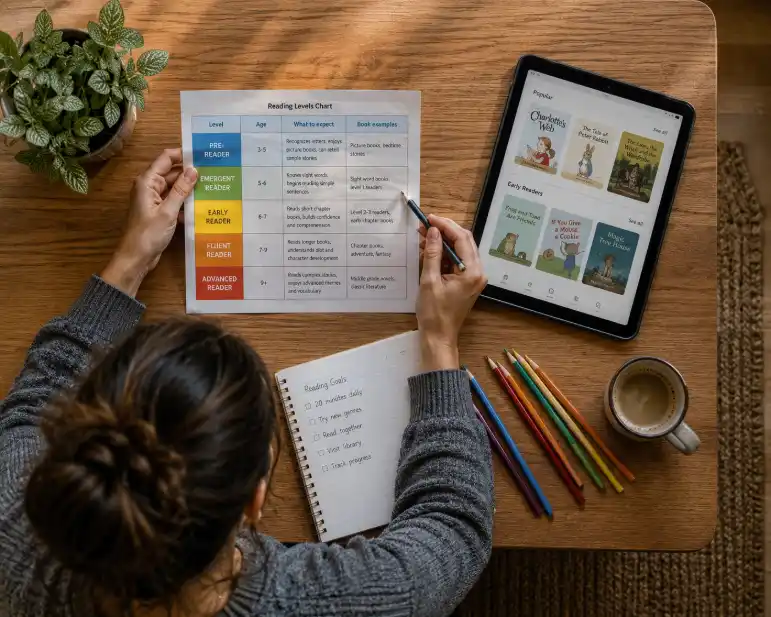
Matching the stage to the book is the single fastest filter for narrowing down free books for kids to read online before you even open a site.
Does reading on a screen work as well as print for a young reader?
For a fluent reader, screen versus print mostly comes down to preference and how the screen displays the text. For a kid still building reading stamina, the details matter more: font size that’s actually adjustable, no auto-playing ads competing for attention, and a layout that doesn’t force constant pinch-zooming to read a single line.
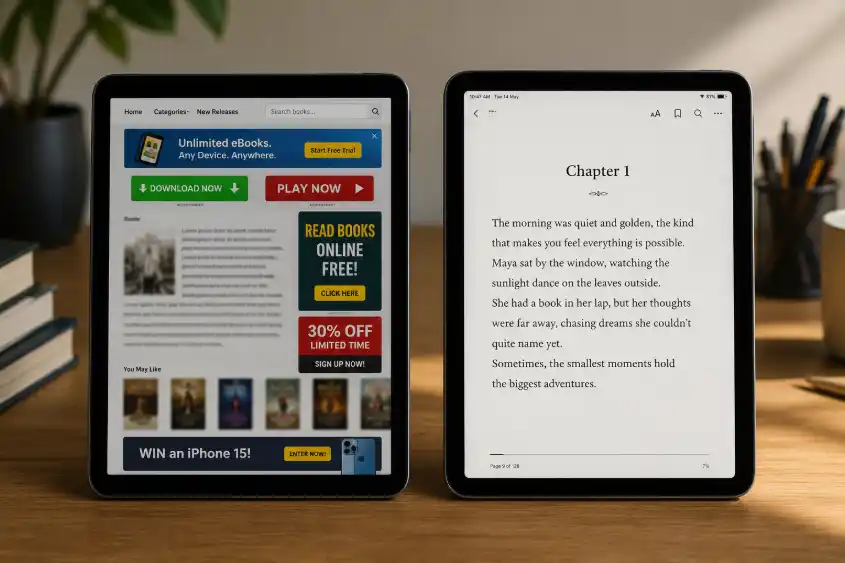
My honest read is that the screen isn’t the obstacle people assume it is. A badly built reading page is the obstacle, and it happens to show up more often on free kids’ book sites than on paid ones, because there’s less incentive to fix it. Most parents searching for free books for kids to read online aren’t actually asking whether screens are bad. They’re asking whether this particular link is going to work, and that’s a fair question given how many don’t.
A quick way to test any site before handing the tablet over: open one book, try to zoom the text, and see if the page still holds its layout. If the words shrink to nothing or the page jumps around, that site failed the test before your kid even got to the story.
What should you check before letting your child use a free reading site?
Before picking from any list of free books for kids to read online, a short check is worth running once before bookmarking anything:
- No sign-up wall in front of the actual book, just to read a story a 7-year-old picked out.
- No ad banners sitting inside the reading area itself.
- Real, complete books, not a 3-chapter teaser that dead-ends into a paywall.
- Text that’s actually text, not a blurry scanned image with no zoom or search.
- A way to close the page and come back to where you left off, without asking a parent to bookmark it manually every time.
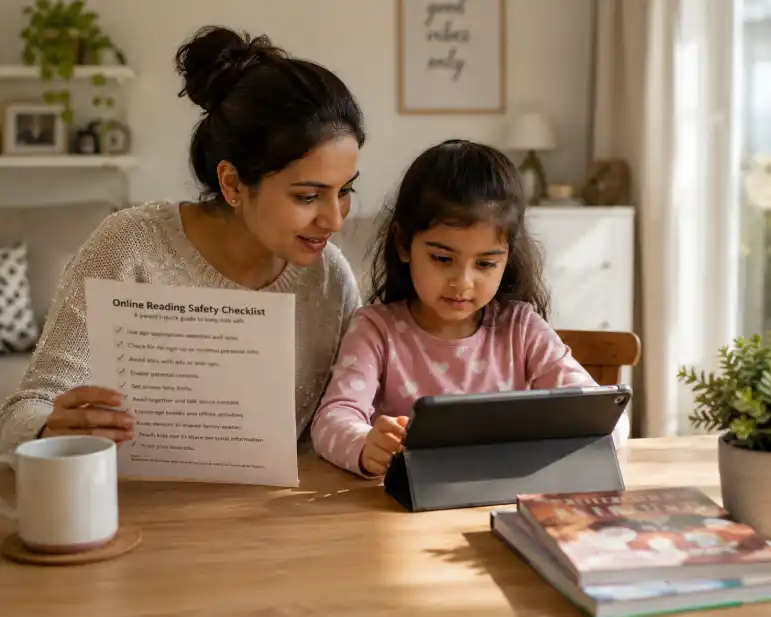
Run through this list once per new site, not once total. A site that was clean last year can add ads or a sign-up wall on a redesign, and a kid won’t tell you the reading experience got worse. They’ll just quietly stop opening it.
Do audiobooks and read-aloud videos teach the same things as reading the words yourself?
Not quite the same thing, and it’s worth being specific about the difference instead of picking a side, especially since so many free books for kids to read online now come with an audio or read-aloud version attached. Listening builds vocabulary, story comprehension, and a feel for how sentences are put together, which matters a lot for a kid who isn’t decoding text fluently yet. Actually tracking the words on a page is what builds decoding speed and reading fluency (the skill of reading smoothly enough that a kid isn’t sounding out every third word).
Storyline Online and similar read-aloud formats are a genuinely good on-ramp for a reluctant or pre-reading kid. They’re not a replacement for time spent with actual text once a kid is ready for it. Both belong in the mix, at different stages.
A useful rule of thumb: if a kid can’t yet sound out most of the words on a page, a read-aloud version builds their story sense and keeps them interested while the decoding skill catches up. Once a kid is decoding fluently, the highest-value move is time spent with the actual text, because that’s the only activity that keeps building reading speed. Swapping every reading session for an audio one at that stage tends to stall progress rather than help it.
This is one more reason the search for free books for kids to read online usually needs to include both formats rather than picking one. A read-aloud video this month and the same story in text form next month covers more ground than either alone.
What does a genuinely better on-screen reading experience look like?
Most free kids’ book sites stop at “here’s a PDF.” A handful go further, and the difference shows up the moment a kid opens the book instead of just downloading it.
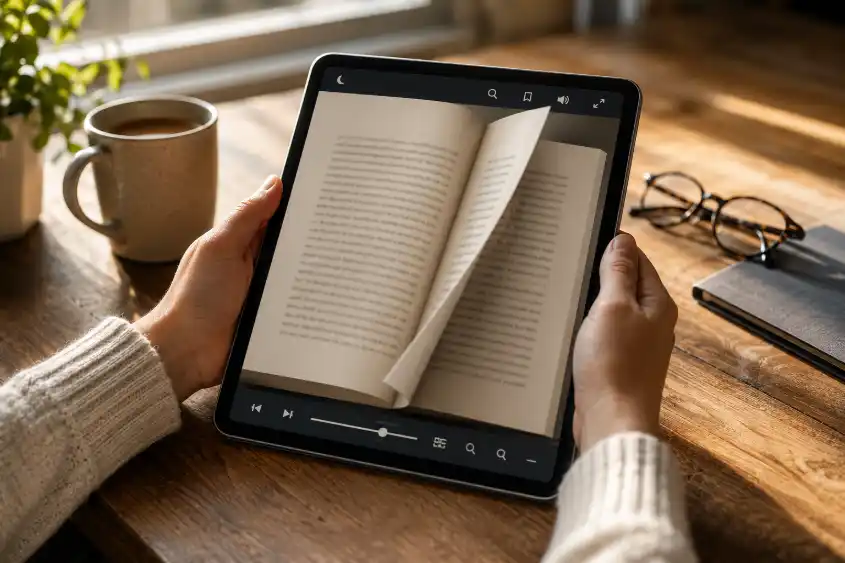
On ebookhunt.online, that means a few specific things a young reader (or the parent supervising screen time) can actually use while going through free books for kids to read online, all free to access:
- A page-turn animation with a sound effect, so the book behaves like a real book instead of a scroll bar.
- Adjustable text zoom, useful for an early reader still working on smaller print.
- Light, dark, and sepia display modes, so reading at bedtime doesn’t mean a blindingly bright white screen.
- A bookmark that remembers exactly where the last session stopped, so a kid can close the tablet mid-story and pick up the same page tomorrow.
- A running reading-time tracker, which is a small thing but gives a parent an honest number instead of a guess about how long a session actually lasted.
- Optional ambient background sound (rain, waves, soft piano) for kids who focus better with a little noise in the room.
Read ebooks online free in 2026,
None of this replaces a good book. It’s the difference between a kid opening a free book once out of curiosity and a kid actually finishing it, which is really the whole point of looking for free books for kids to read online in the first place: not just access, but a session a kid wants to come back to tomorrow.
Why do most “free books for kids” lists feel the same?
Search for free books for kids to read online and most results repeat the same five names in a different order, with no real explanation of what a parent is actually choosing between. That’s not laziness on the writer’s part so much as a shortcut: it’s faster to list links than to actually open each one, check the reading level, check for ad clutter, and check whether the “free” book is legitimately free or quietly pirated.
The honest version of free books for kids to read online as a topic has fewer links and more actual judgment calls: this source is genuinely free and legal, this one is level-appropriate for a 6-year-old and not a 10-year-old, this one has a reading experience worth using and this one doesn’t. That’s the version worth trusting, and it’s also the version that takes longer to write, which is exactly why it’s rarer.
If you take one thing from this page, make it this: treat free books for kids to read online as a short evaluation, not a one-click decision. Open the book, check the level, check the screen, then let your kid actually start reading.
FAQ
Is it legal to find free books for kids to read online?
Yes, when the book is genuinely public domain or the site has the rights to offer it free, which is exactly how Project Gutenberg, Oxford Owl, and most library-run collections work. It’s not legal when a site is hosting a currently copyrighted book without permission, no matter how “free” the link looks.
At what age can a kid move from picture books to full chapter books?
Most kids move into short chapter books somewhere between 6 and 8, once they’re reading leveled readers fluently. It varies a lot by kid, and pushing a child into longer books before they’re ready usually backfires by making reading feel like work.
Are free kids’ ebook sites safe to use without signing up for anything?
The reputable ones don’t ask for a sign-up to read the core free collection at all. Treat any site that demands an account, a credit card, or an app download just to open a children’s story as a reason to check somewhere else first.
Do read-aloud videos actually help kids who don’t like reading?
Yes, especially as a bridge. A kid who resists reading text often responds well to hearing a story performed first, then moving to the same story in text form once they’re familiar with it.
What’s the real difference between a public domain kids’ book and a “free” one from a random site?
A public domain book’s copyright has expired, so it’s legally free everywhere, forever. A “free” listing on a random site can just as easily be a pirated copy of a currently copyrighted book, offered without the author’s permission, which is a different situation entirely even though the download button looks the same.
Does a page-flip animation or dark mode actually change whether a kid reads more?
It changes whether the session is comfortable enough to continue. A cramped, glaring, ad-heavy page pushes a kid to close the tab after two minutes. A readable, comfortable one removes that friction, though the story itself is still what keeps a kid coming back.
How much daily reading time is reasonable for a young reader?
Most reading specialists suggest starting around 15 to 20 minutes a day for early readers and building from there, though the number matters far less than consistency. A short daily habit beats an occasional long session every time.
What’s the fastest way to check if a site offering free books for kids to read online is worth bookmarking?
Open one book, not the homepage. If it loads without a sign-up, the text is clean and zoomable, and there’s no ad sitting inside the reading area, it’s worth keeping. If any of those three fail, close it and try the next source instead.
Should you choose free books for kids to read online by genre or by reading level?
Reading level first, genre second. A perfectly matched genre in a book that’s too hard to decode still gets closed after two pages, while a slightly boring genre at the right level still gets finished. Once the level fits, genre is what keeps a kid coming back for the next one.
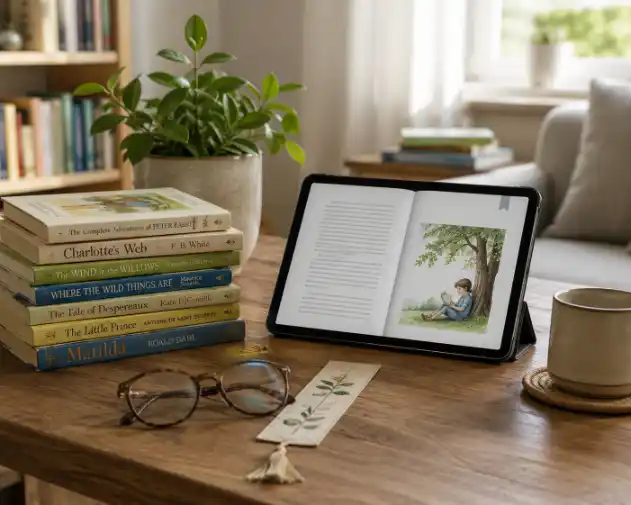
[…] ebookhunt.online’s reader compares to a basic […]