
You can read ebooks online free right now, without downloading a file, creating an account, or handing over a card number. This guide covers seven sites that actually deliver on that in 2026, how to tell a genuinely free reading site from one that buries you in pop-ups, and what a good online reading experience should feel like. The short answer: Project Gutenberg and Open Library cover public domain classics well, while ebookhunt.online is built for a smoother reading experience with a real page-turn animation and no login wall.
What does “read ebooks online free” actually mean in 2026?
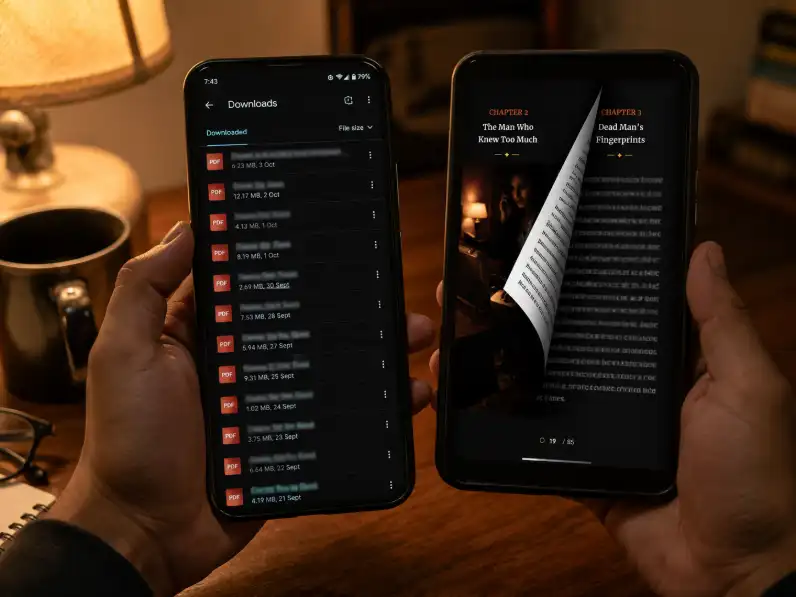
It means opening a book in your browser and reading it there, page by page, without saving a file to your device first. That’s a different habit than downloading a free ebook, which is what most “free ebook sites” articles online actually cover.
Downloading gives you a permanent copy in EPUB or PDF format (a format that keeps a page’s exact layout, unlike a plain text file). Reading online skips that step entirely. You open a link, the book loads in the browser, and you start reading immediately. No storage used on your phone, no file to manage later, no worry about which app opens which format.
This matters more than it sounds like. A 2025 survey by the Pew Research Center found that most adults who read digitally do it on a phone, where storage space and app clutter are real friction points
Pew Research digital reading habits A primary research source on ebook and digital reading trends. Reading online removes both problems at once.
How is online reading different from downloading a free ebook?
Online reading happens inside the platform. Downloading moves the file onto your device, where you control it completely but also become responsible for it.
Three practical differences stand out:
- Storage: an average EPUB runs 1-3 MB, and a scanned PDF can run past 50 MB. Reading online uses none of your device storage.
- File management: downloaded books pile up across folders, email attachments, and cloud drives. An online library keeps your reading list in one place with bookmarking built in.
- Device switching: a downloaded file stays on the device you saved it to unless you sync it manually. An online reading account (where one exists) picks up where you left off on any device.
Downloading still has its place. If you want a book available with no internet connection, on a flight or somewhere with no signal, a saved EPUB is still the more reliable option. For everyday reading at a desk or on a couch with wifi nearby, reading online free removes a step most people don’t actually need.
7 sites where you can read ebooks online free
Every site below lets you read in the browser, at no cost, and doesn’t require a credit card. Legality and login requirements vary, so both columns matter as much as the price.
| Site | Login required | Best for | Notable feature |
|---|---|---|---|
| ebookhunt.online | No | Fiction with a real reading experience | 3D page-turn animation, dark mode, ambient sound |
| Project Gutenberg | No | Public domain classics | Over 75,000 free titles, all copyright-free |
| Open Library | Free account for borrowing | Modern titles via digital lending | Over 1.7 million scanned books |
| Internet Archive | No, for public domain items | Rare and out-of-print books | Full-text search inside scanned pages |
| Standard Ebooks | No | Beautifully formatted classics | Hand-typeset public domain editions |
| ManyBooks | Free account for extras | Genre browsing | Personalized recommendations |
| Google Books | No, for preview and full-view titles | Quick previews and full public domain reads | Search inside millions of scanned books |
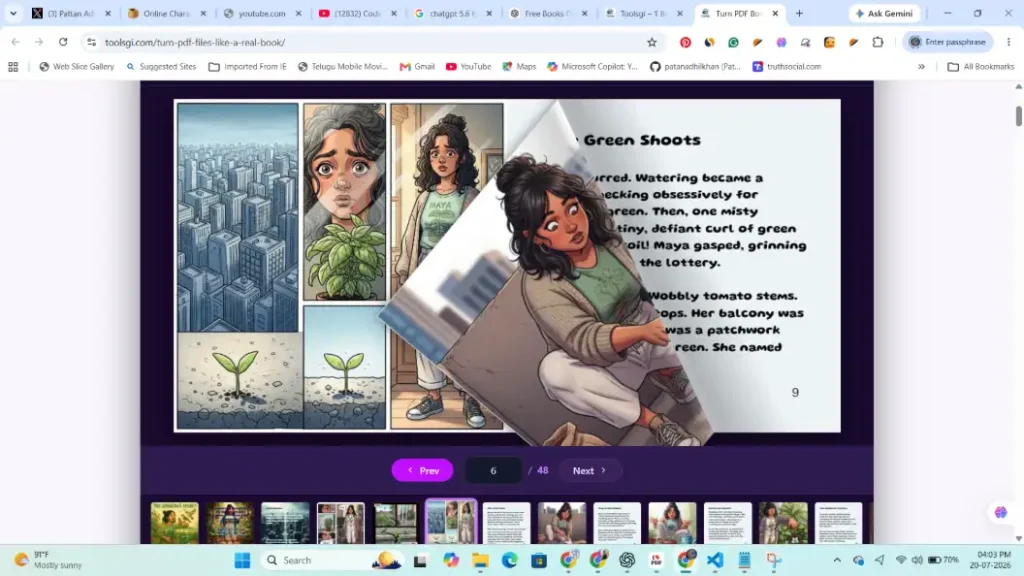
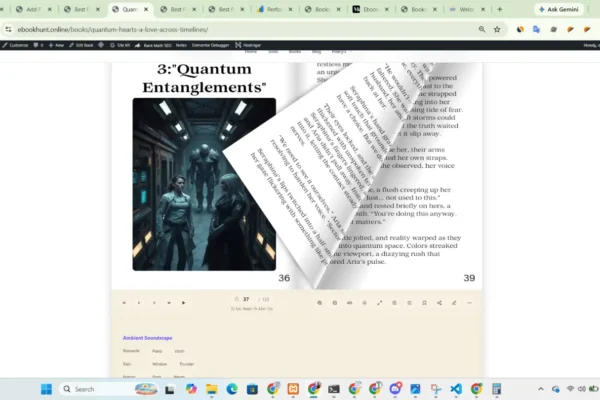
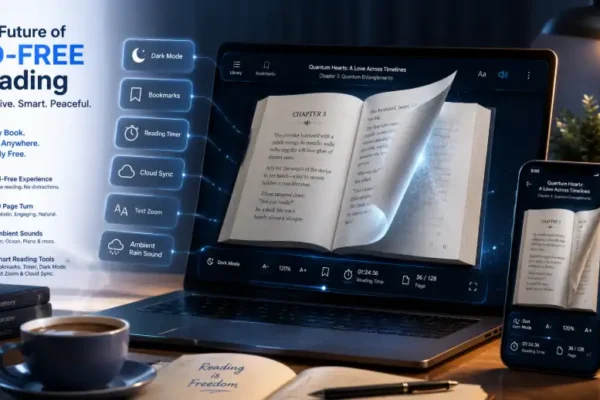
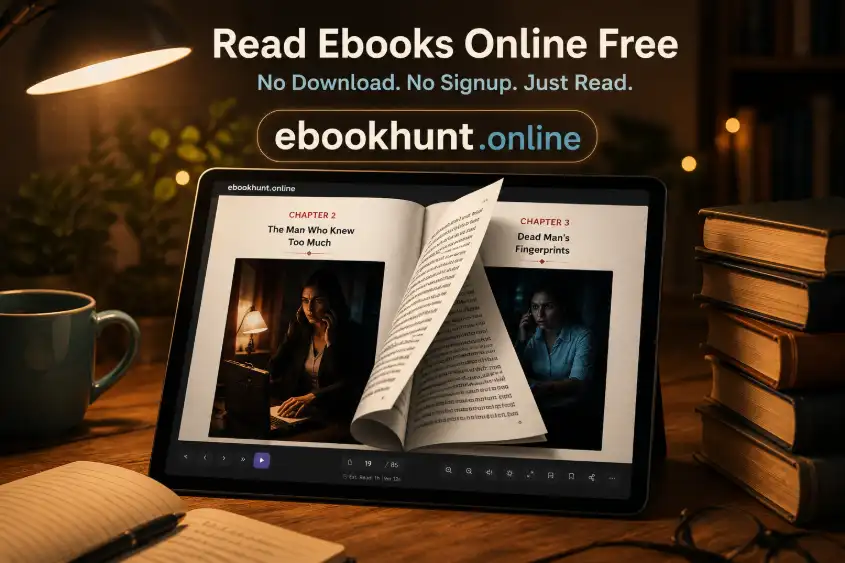
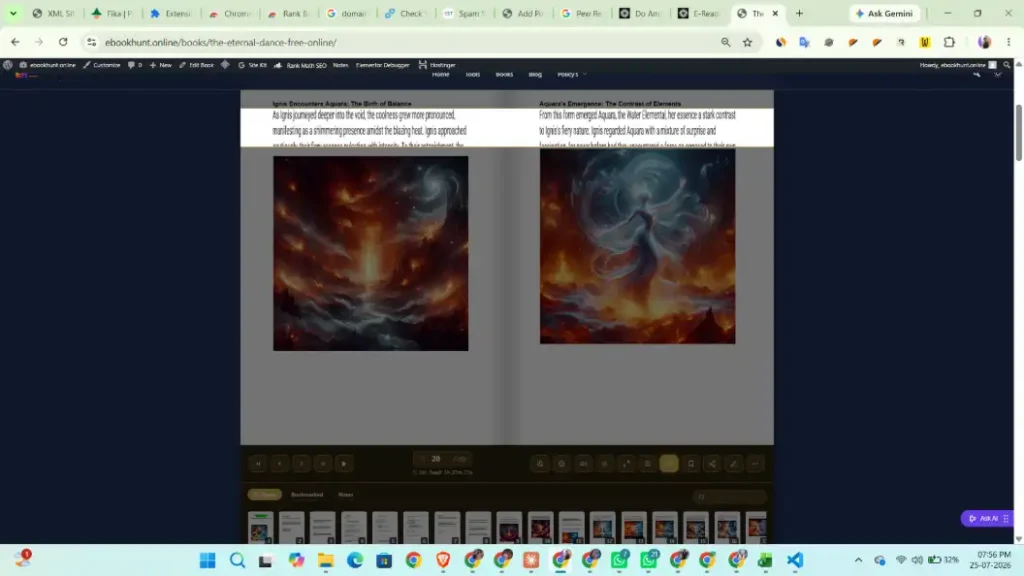
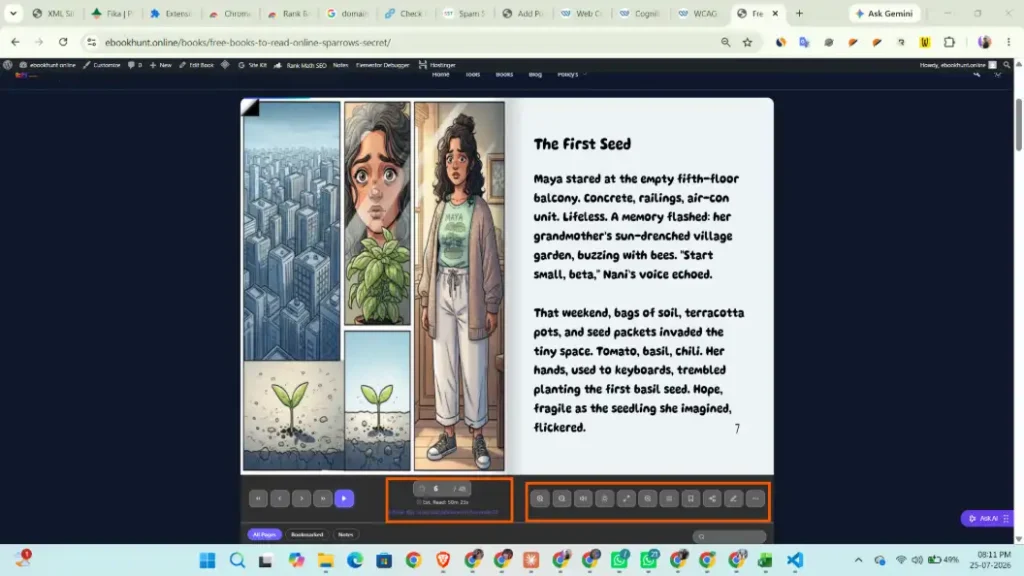
ebookhunt.online is built specifically around the reading experience rather than just the catalog. Pages turn with a 3D animation and a page-turn sound, similar to handling a physical book. Ambient background sound (ocean, rain, piano, violin, thunderstorm) toggles on with one button, dark mode is available for low-light reading, and the text zoom lets you adjust size line by line instead of jumping between fixed font sizes. No account or signup gate sits between you and the book.
Project Gutenberg is the oldest free ebook project online, running since 1971. Every title on it is in the public domain (works whose copyright has expired, meaning anyone can republish them freely), so the catalog leans heavily toward classic literature rather than recent releases. The interface is plain text-first, built for function over polish.
Open Library, a project of the Internet Archive, mixes public domain books with a digital lending system for newer, copyrighted titles. Borrowing works like a real library: one reader at a time per digital copy, for a fixed loan period. A free account is required for the lending feature, though browsing the catalog isn’t gated.
Internet Archive hosts full scans of physical books, including many that were never digitized elsewhere. Full-text search inside the scans is genuinely useful for research, letting you jump straight to the page that mentions a specific term.
Standard Ebooks takes existing public domain texts and re-typesets them by hand to modern formatting standards: proper chapter breaks, corrected typos from old scans, and consistent styling. The catalog is smaller than Gutenberg’s by design, prioritizing quality over volume.
ManyBooks organizes its catalog by genre and mood, with a recommendation engine that improves once you’ve read a few titles through a free account. The core reading and browsing experience works without signing up.
Google Books offers full online reading for public domain titles and preview access for many in-copyright books. Its search-inside feature covers one of the largest scanned book databases that exists, useful for confirming a quote or checking a specific passage before committing to a full read.
Book reviews on ebookhunt.online
What should you actually look for in a free online ebook reader?
A genuinely good site to read ebooks online free gets four things right: no forced signup, no ads breaking up the reading flow, a catalog that’s actually current or actually deep in its niche, and a reading interface that doesn’t fight you.
No forced signup for basic reading. A library card model, where you need an account only to borrow a time-limited copy, is reasonable. A wall that blocks every single book behind a signup form before you’ve even seen a preview page is a sign the site cares more about your email address than your reading experience.
Minimal or no ads inside the reading view itself. Ads on a homepage or catalog page are a normal way free sites cover hosting costs. Ads that interrupt mid-chapter or auto-play video are a different problem entirely, and they’re one of the most common complaints in Reddit threads about free ebook sites (add external link here: “free ebook site complaints” — links to a relevant, well-moderated discussion thread on ad-heavy reading sites).
A catalog that matches what you’re actually looking for. Public domain sites are excellent for classics and terrible for anything published in the last 20 years. A site built around a specific niche, like ebookhunt.online’s fiction focus, is worth checking before assuming a generalist site is the better fit.
A reading interface that feels comfortable for more than 10 minutes. Adjustable text size, a dark mode option, and a stable scroll or page-turn mechanic matter more than they sound like they would. Eye strain from a poorly designed reader is the single biggest reason people give up on reading long-form content on a screen, according to accessibility research published by the World Wide Web Consortium
Is it legal and safe to read ebooks online free?
Yes, as long as the platform actually holds the rights to the book, either because it’s in the public domain or because the platform has a licensing or lending agreement in place. The legal risk lives entirely in the source, not in the act of reading online itself.
Public domain sites like Project Gutenberg, Standard Ebooks, and the classics section of Internet Archive carry no legal risk at all: the copyright has expired, so anyone can host and read the text freely. Lending libraries like Open Library operate under a legal framework called controlled digital lending, which mirrors how a physical library lends a single copy to one borrower at a time.
The risk shows up on shadow libraries, sites that host copyrighted, in-print books without permission from the author or publisher. Several of the largest names in that space are currently facing active lawsuits: in early 2026, major publishers including Penguin Random House, HarperCollins, and Simon & Schuster filed suit against one of the best-known shadow libraries for mass copyright infringement, following a separate multi-billion-dollar claim from a group of record labels over similar practices. Using a site like that puts both the legality and the safety of your device at risk, since unlicensed download sites are also common vectors for malware bundled into “reader” apps or browser extensions.
A simple check before trusting a new site: does it name its source (public domain, a licensing deal, or an author’s own upload), or does it just list thousands of recent bestsellers with no explanation of where they came from? The second pattern is a clear warning sign.
How does ebookhunt.online’s reading experience compare?
Most free ebook sites build around catalog size. ebookhunt.online builds around the minutes you actually spend reading.
The difference shows up in small details: pages turn with a realistic 3D animation and sound instead of a flat scroll, a live reading-time tracker shows how long you’ve actually spent in a book, and bookmarking saves your place automatically so returning to a title later doesn’t mean hunting for where you stopped. None of these features require an account. You open a book and start reading.
For readers who specifically want the physical-book feeling while reading digitally, that combination of page-turn animation, ambient background sound, and no signup wall is currently uncommon among free reading platforms, most of which stick to a plain scrolling text view.
If you’re deciding where to start, pick based on what you’re reading. Public domain classics belong on Project Gutenberg or Standard Ebooks. Everything else, especially fiction you want to actually enjoy reading rather than just search through, is where a dedicated reading platform earns its place.
FAQ
Can I read ebooks online free without creating an account?
Yes. Sites like ebookhunt.online, Project Gutenberg, and Standard Ebooks let you open and read any book in their catalog with no signup required. Account-gated sites like Open Library only require a login for their borrowing feature, not for browsing.
Is reading ebooks online free actually legal?
It’s legal when the book is in the public domain or the platform has a licensing or lending agreement in place. It becomes a legal risk only on shadow libraries hosting copyrighted books without permission, which several publishers are actively suing as of 2026.
What’s the difference between reading online and downloading a free ebook?
Reading online opens the book directly in your browser with no file saved to your device, while downloading gives you a permanent EPUB or PDF copy you can access offline. Online reading uses no storage and often includes features like bookmarking and reading-time tracking that a downloaded file doesn’t have.
Do I need wifi to read ebooks online free?
Yes, in most cases, since the book loads from the site’s server as you read rather than being stored on your device. If you need offline access, such as for a flight, downloading a copy from a public domain site is the better option.
Are there free sites to read recent, newly published books online?
Mostly no. Public domain sites cover books whose copyright has expired, generally works published before the mid-20th century. Lending libraries like Open Library carry some newer titles through licensed digital lending, with limited copies and wait times, similar to a physical library.
Why do some free ebook sites feel harder to read on than others?
The difference usually comes down to the reading interface itself: fixed font sizes, no dark mode, and a plain scroll instead of proper pagination all add friction. Sites built around the reading experience, rather than just the catalog, tend to include adjustable text size, dark mode, and smoother page navigation.
Is it safe to read ebooks online free on my phone?
Yes, on legitimate sites. The safety risk comes from unlicensed shadow libraries and their apps or browser extensions, which are a known source of malware. Reading directly in a browser on a legal site carries no more risk than browsing any other website.